Not cooling, or cooling unevenly
The compressor may be running while nothing gets cold. Condenser airflow, evaporator fan, defrost heater, control board or a refrigerant leak — all look the same from the door.
Built-in, integrated and panel-ready refrigerators — the units that are part of the kitchen rather than standing in it. Sub-Zero and Viking refrigeration is what we do most, and sealed-system work is the part most shops send elsewhere.
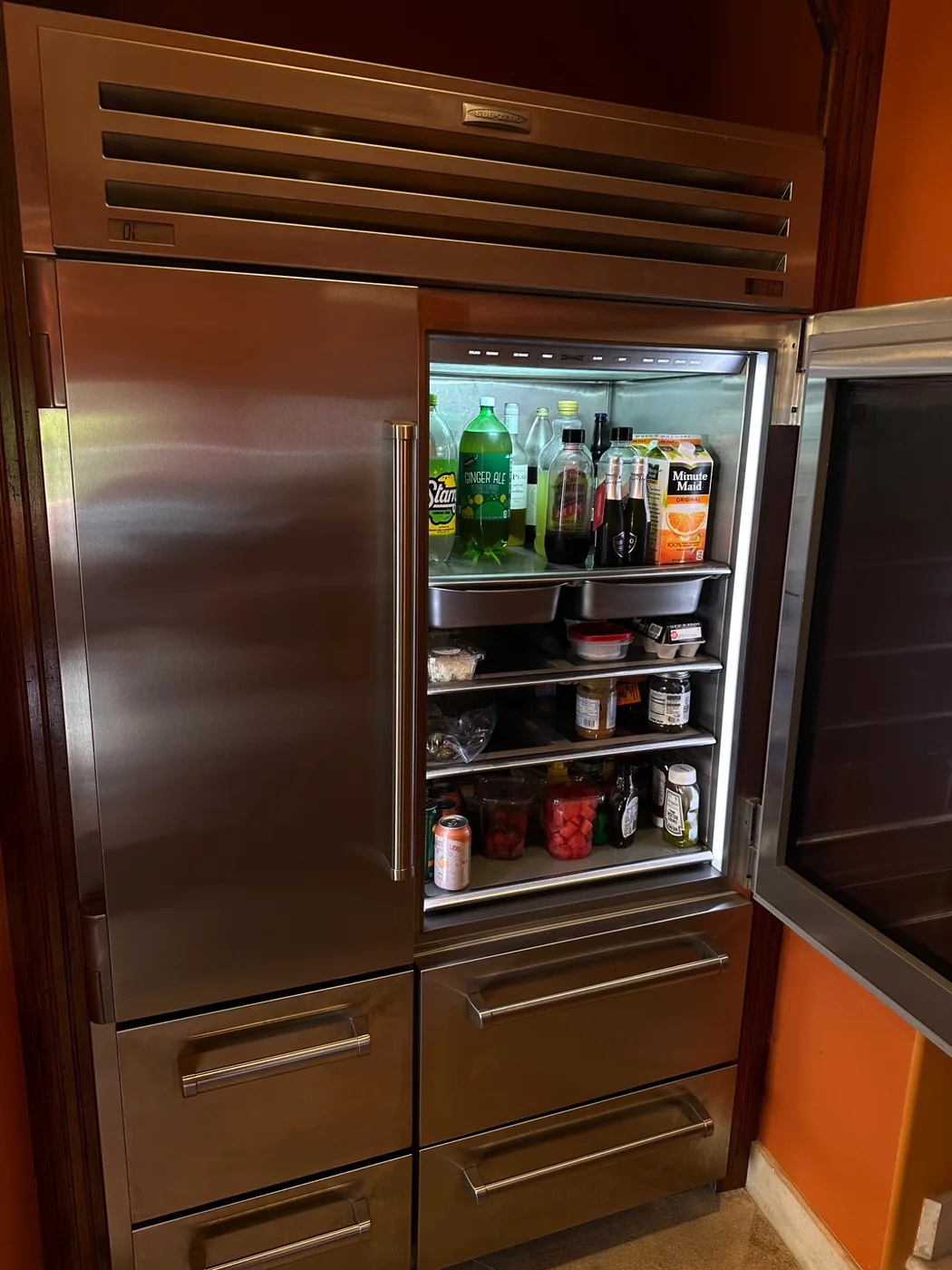
Describe what the refrigerator is doing and we will tell you what it usually turns out to be — before anyone drives out.
The compressor may be running while nothing gets cold. Condenser airflow, evaporator fan, defrost heater, control board or a refrigerant leak — all look the same from the door.
Almost always a blocked defrost drain. Cheap to clear, expensive to ignore: water under a built-in reaches the subfloor and the cabinet sides. Read the guide →
Frost on the back wall or a sheet under the bottom basket points at the defrost cycle or a door seal that stopped sealing.
The fill valve, the water line, the module or a frozen fill tube. Ice production is also the first thing to fail when cooling drifts.
Fans and compressors announce themselves before they fail. A noise that worsens over weeks is worth a visit while it is still a fan.
A unit that never cycles off is working harder than it should — dirty condenser, failing seal, low charge or a control problem.
Built-in and integrated refrigerators, panel-ready units, refrigerator and freezer columns, under-counter refrigeration and wine storage. Most of it is Sub-Zero and Viking, because that is what fills kitchens on this side of the lake.
What we do not chase is standard freestanding units. A general appliance shop will get to those faster and charge less, and there is no reason to pay specialist rates for a job that does not need one.
When a refrigerator loses refrigerant, or the compressor fails, the repair needs EPA certification, recovery equipment and a vacuum pump. Plenty of companies quote a replacement instead, because they cannot do the work. On a built-in that is an expensive shortcut: replacing the unit means rebuilding the opening around it.
We do sealed-system work, and we document it — here is a refrigerant leak repair and here is a full compressor, evaporator and heat exchanger replacement, with photos from the job.
Refrigeration calls across Seattle and the Eastside, from our route base in Bellevue:
The diagnostic visit is $89 and it comes off the repair price when you approve the work. Beyond that it depends entirely on what failed: a blocked drain line or a fan is a small job, a control board is a part plus an hour, and sealed-system work with a refrigerant recharge is the expensive end. You get the number before anything is opened up, not after.
Usually yes, and more often than people expect. A built-in is fitted into the cabinetry around it — replacing the unit means matching an opening, panels and trim, so the joinery bill can exceed the appliance. Units we service are frequently 15 to 25 years old and still worth fixing. When they are not, we say so.
It means power is fine and the fault sits in the cooling side: condenser airflow, evaporator fan, defrost system, control board or the sealed system itself. Those look identical from the outside and cost very different amounts, which is why the diagnosis matters more than the guess.
Our work is built-in, integrated and panel-ready refrigeration, plus professional column units and wine storage. That is where the specialised diagnostics and the sealed-system certification actually matter. For a standard freestanding unit a general appliance shop will usually be quicker and cheaper.
Same-day and next-day visits are common when the route allows. A refrigerator that has stopped cooling gets priority over a scheduled maintenance call — food spoils on a clock.
A refrigerator that stopped cooling gets priority on the route.
The $89 diagnostic fee is applied toward an approved repair.