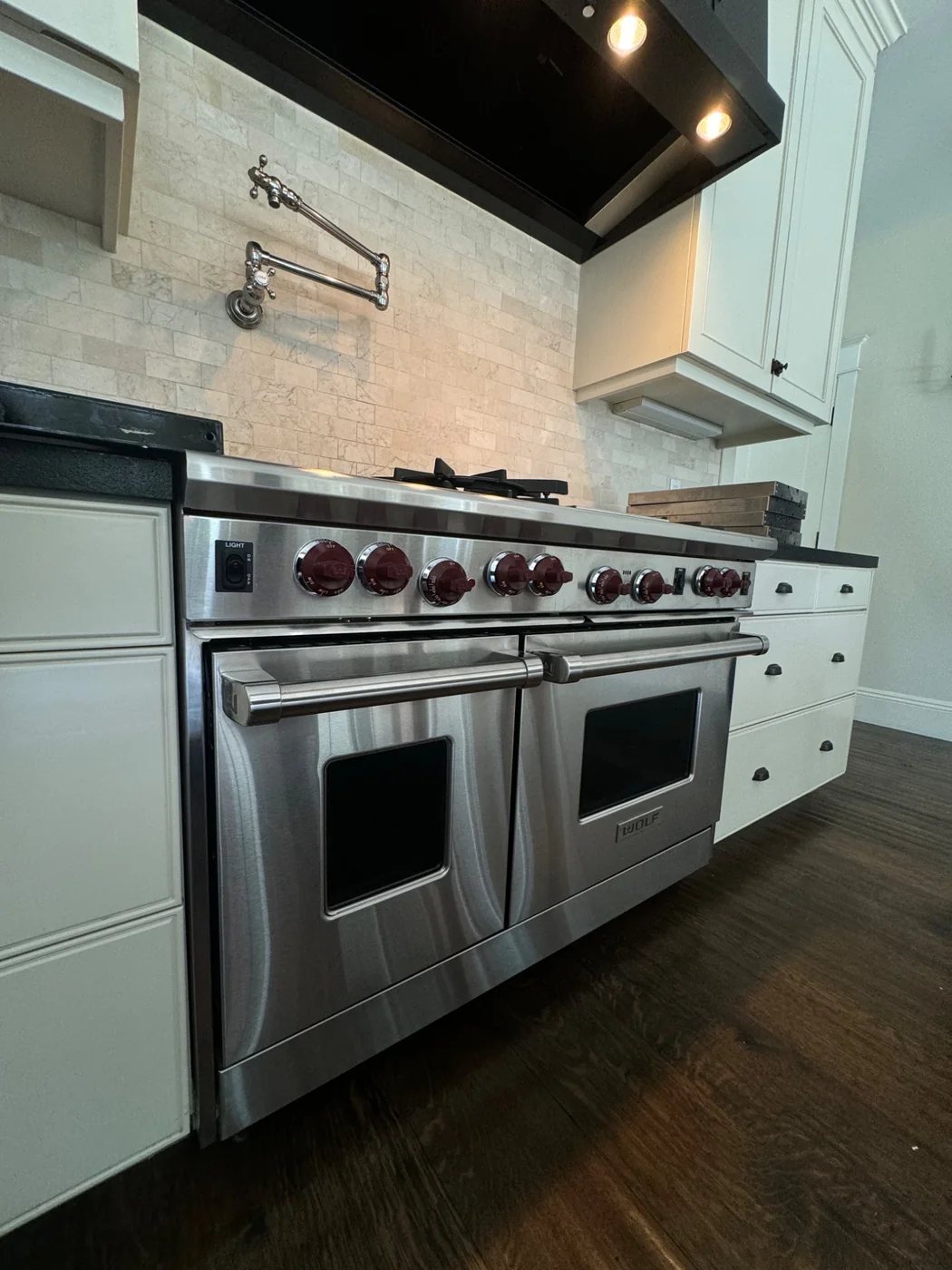
Focused diagnosis
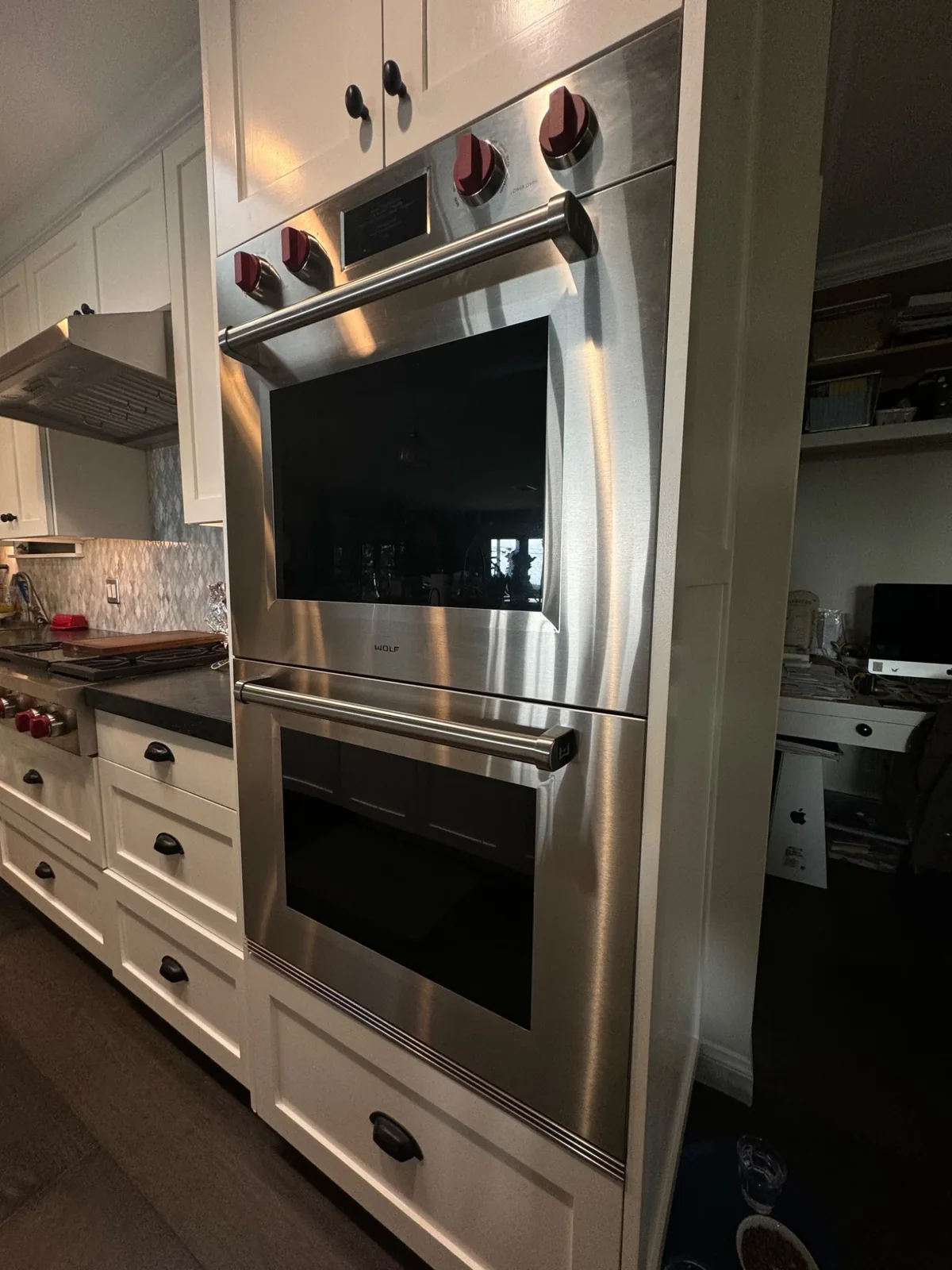
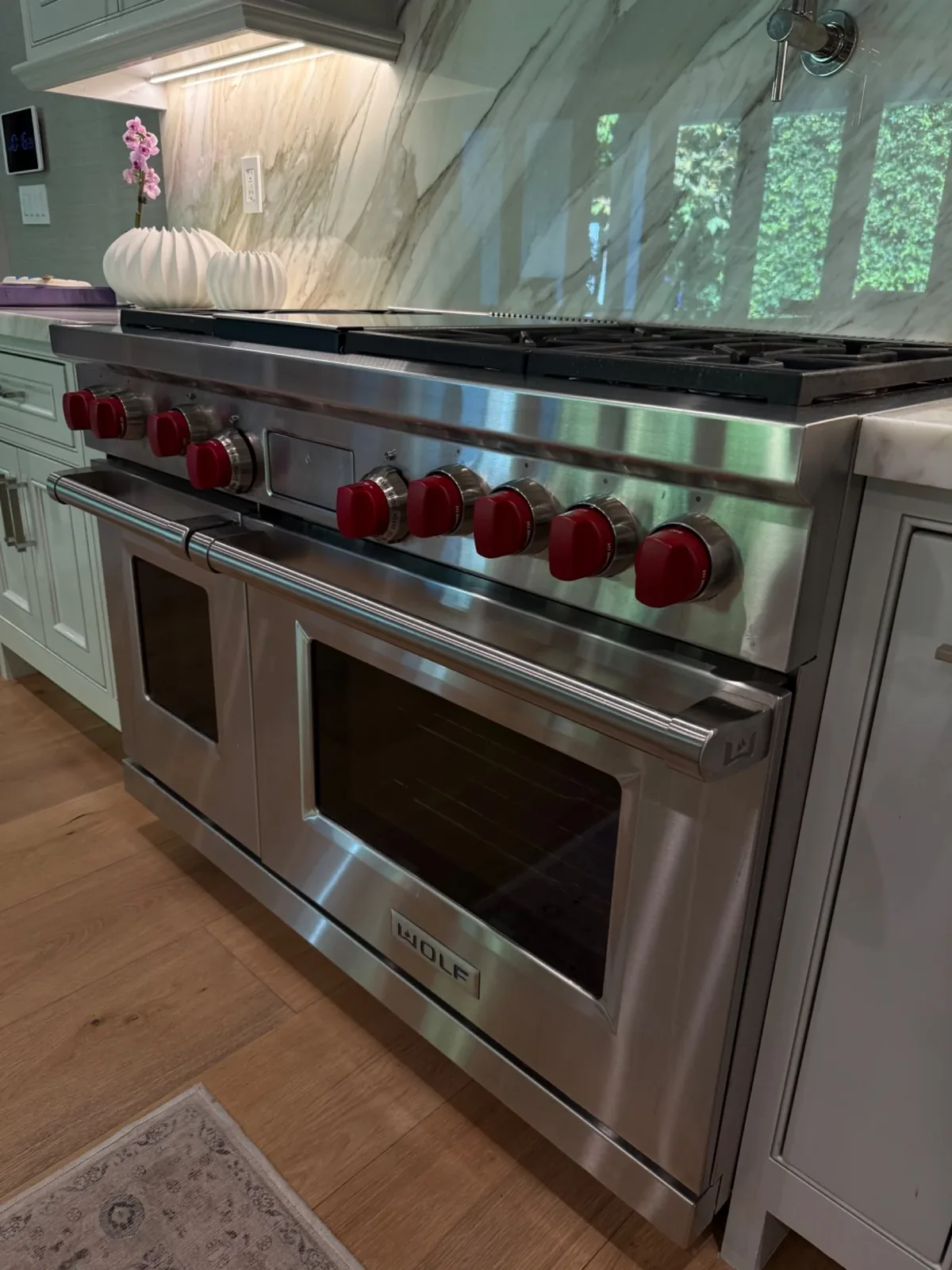
Common Wolf symptoms we evaluate
Similar symptoms can come from different components. We verify appliance condition, installation and system performance before recommending parts or a repair scope.
- Built-in wall oven will not heat or preheats unusually slowly
- Food bakes unevenly or the displayed temperature is inaccurate
- Bake or broil element does not operate
- Convection or cooling fan is noisy, intermittent or stationary
- Door does not close, latch or seal correctly
- Display shows an error or electronic controls fail to respond
Repair and diagnostic areas
Testing is selected for the reported symptoms and model design. The goal is to identify the failed system rather than replace parts by assumption.
- Bake and broil element electrical testing
- Temperature sensor, calibration and heat-distribution evaluation
- Convection fan, cooling fan and airflow diagnosis
- Control board, relay and user-interface testing
- Door hinge, latch, gasket and alignment inspection
- Power supply, wiring and installation-ventilation checks
What happens during the service visit
- We confirm the model, installation and reported symptoms.
- The technician tests the systems most likely to cause the failure.
- You receive a clear explanation and repair price before work begins.
- The $89 diagnostic fee is applied when the recommended repair is approved.
Scheduling, pricing and warranty
Same-day and next-day visits are often available when route capacity allows. Completed repairs include a one-year limited parts and labor warranty, subject to invoice terms. Parts availability and model condition can affect completion time.
Questions about Wolf wall oven repair
A Wolf wall oven may miss the set temperature because of a heating element, sensor, relay, airflow or control fault. Accurate diagnosis requires checking actual cavity temperature and component operation rather than assuming the oven only needs calibration. Slow preheating and uneven baking can have different causes.
Yes, we service many built-in Wolf single and double wall oven configurations. Diagnosis can cover heating elements, temperature sensors, convection systems, cooling fans, doors, latches and electronic controls. Providing the model number and photos of the installation helps identify access requirements before the appointment.
A noisy convection fan may involve the fan motor, blade contact, mounting, debris or surrounding airflow. The oven should be inspected to locate the sound and verify safe operation. Replacing a fan without confirming the source can leave the original noise or vibration unresolved.
Some repairs require partial or full access to the built-in oven, but removal depends on the model and failed component. Custom Bellevue kitchens may use tight cabinetry, integrated trim or stacked installations. Wide photos and the model number tell the technician what to protect and whether the unit needs lifting to reach.
The diagnostic fee is $89 and is applied toward an approved repair. The technician verifies the complaint, tests the heating and control side of the appliance, then gives you an estimate before work begins. Final pricing depends on the model, failed components, installation access and required parts.