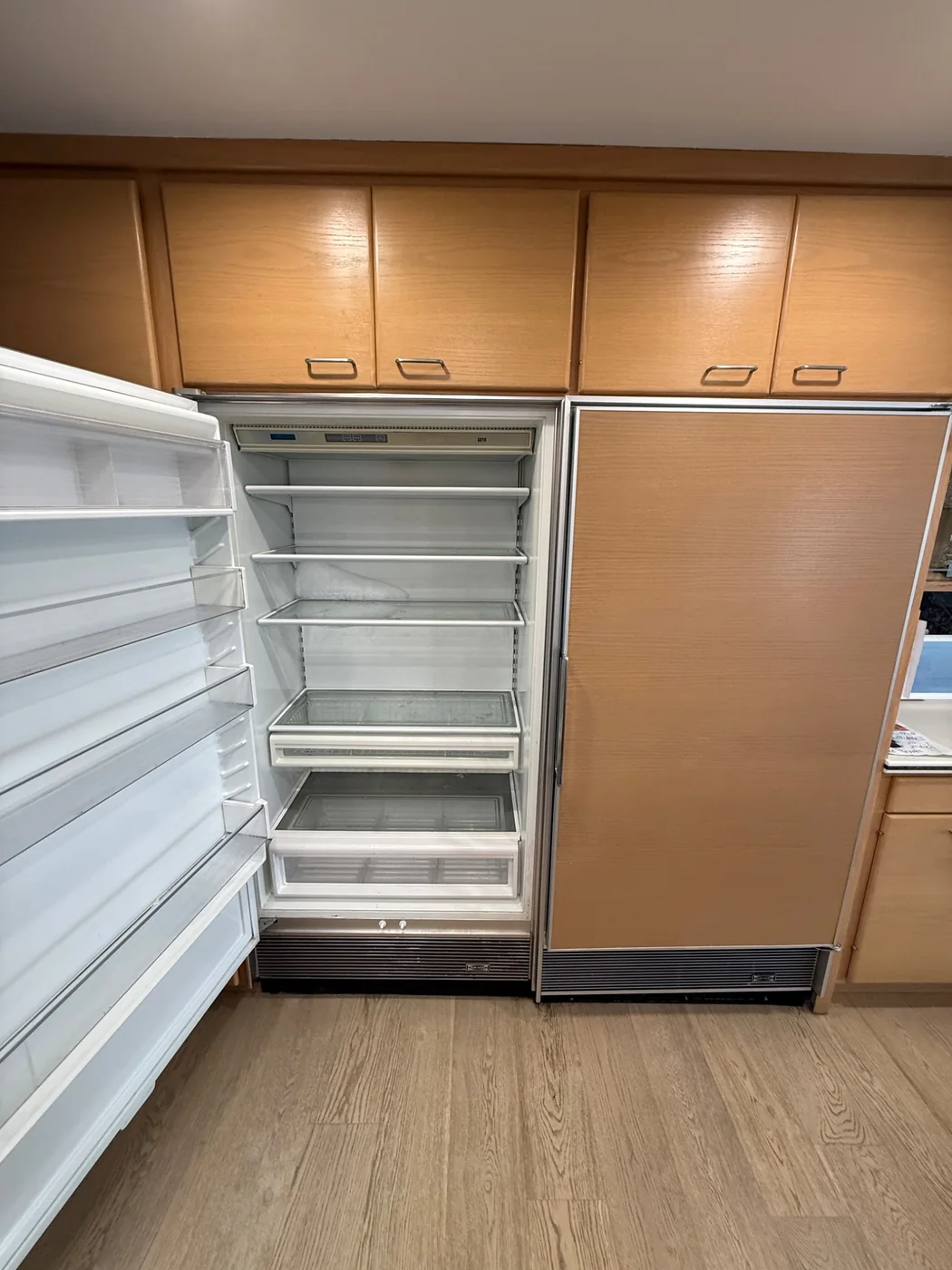
Important: Disconnect power or gas before any service procedure that requires access to internal components. These guides explain symptoms; they are not a substitute for safe technical diagnosis.
Check the temperature pattern
Compare the fresh-food and freezer temperatures. A warm refrigerator with a normal freezer may point toward airflow, a damper, or fan operation, while both sections warming can suggest a broader cooling or control problem.
Look for frost and blocked airflow
Heavy frost behind an interior panel can restrict airflow even when the compressor is running. Avoid chipping ice with tools because refrigeration tubing and liners can be damaged.
Listen for fans and compressor operation
A stopped evaporator fan, inefficient condenser airflow or a compressor that cycles abnormally can all reduce cooling capacity.
When sealed-system testing is needed
If airflow and controls are operating but cooling remains weak, pressure, frost pattern and compressor performance may need to be evaluated.
Frequently asked questions
A power reset may clear a temporary control issue, but it will not repair a failed fan, defrost component, sensor, leak, or compressor problem.
Allow several hours for a meaningful temperature change. Repeatedly adjusting the setpoint can make the pattern harder to evaluate.
Schedule service when food temperatures are unsafe, frost returns, the unit runs constantly, or cooling does not recover after basic checks.